HVAC repair response time central in Illinois is the gap between your call and a technician’s arrival, and it stretches dramatically when the weather turns extreme. Two clocks run at once during any breakdown: dispatch time, until someone logs your address and routes you, and arrival time, until a truck reaches your driveway. During extreme heat or cold, same-day and emergency calls often carry additional fees.
Response time is not repair time; a technician can arrive within hours and still need a return visit for a part.
Safety emergencies like gas odor or burning smells are treated as top priority with dispatch often immediate.
Diagnosis typically takes 20-45 minutes, while a common part swap runs 30-60 minutes.
Tell the dispatcher up front if you are on a rural route so the estimate reflects the drive.
Never run a gas stove or oven for heat, and never bring a generator or charcoal grill indoors.
What HVAC Repair Response Time Actually Means in Central Illinois
HVAC repair response time central in Illinois is the gap between your call and a technician’s arrival at your door, and that gap stretches dramatically when the weather turns extreme. For HVAC repair in Normal IL, Chambers Services will answer the call. This guide covers what actually drives those wait times, how to get faster help, and what to do in the hours before a tech shows up. A common mistake is assuming every company’s “fast service” claim means the same thing. It doesn’t.
Two clocks run at once during any breakdown. The first is dispatch time: how long until someone answers, logs your address, and puts you on a route. The second is arrival time: how long until a truck pulls into your driveway. Most homeowners only ask about the second one, then feel blindsided when the first eats half a day.
Response time is not repair time. A technician can arrive within hours and still need a return visit once the right part is on the truck. Knowing which clock you’re waiting on changes how you plan your day, and it changes what you should ask when you call.
Emergency HVAC Repair: When to Call and How Fast Help Arrives
Call for emergency HVAC repair when the indoor temperature is climbing into dangerous territory during a heat wave, when a furnace quits in single-digit temperatures, or when you smell gas or burning near the equipment. Those situations are the ones to call about first, but how quickly a truck arrives depends on the season and the route.
What qualifies as a true emergency? We use a short list:
No cooling during a heat index above 100°F, especially with infants, elderly family members, or anyone with health conditions in the home
No heat when overnight temperatures drop below freezing
Any gas odor, scorched wiring smell, or repeated breaker trips when the system starts
Water pooling around the indoor unit or furnace
During extreme heat or cold, ask how quickly the company can respond, since same-day and emergency calls often carry additional fees.
A local framework for expected arrival
Rather than promise a single number, it helps to think in tiers. Your actual window depends on call volume the day you call.
Urgency tier
Typical trigger
What to expect on arrival timing
Safety emergency
Gas odor, burning smell, repeated breaker trips
Treated as top priority; dispatch often immediate, arrival as soon as a tech can safely reach you
No heat or no cooling with vulnerable occupants
Infants, elderly, or medical conditions in extreme temperatures
Moved ahead of routine calls; same-day arrival is the goal
No heat or no cooling, no vulnerable occupants
System completely down in peak season
Same-day or next-day depending on queue depth
Partial failure
System running but not keeping up
Usually next available slot
Routine
Tune-up, minor noise, filter change
Scheduled appointment, often several days out
If you are on a rural route, tell the dispatcher up front so the estimate reflects the drive.
What to have ready when you call
A dispatcher triages faster when you can answer these in the first minute:
Is anyone in the home vulnerable to temperature extremes?
Is the system completely down, or running but not keeping up?
What is the indoor temperature right now?
Do you smell gas, burning, or see water where it should not be?
How Long Does HVAC Repair Take From Arrival to Fix?
Here’s how the time typically breaks down:
Stage
Typical Duration
What Happens
Diagnosis
20-45 minutes
Technician tests the system and confirms the fault
Common part swap
30-60 minutes
Capacitor, thermostat, igniter, or filter replacement
Major component repair
2-4 hours
Blower motor, compressor, or heat exchanger work
Return visit
Scheduled separately
Part must be ordered for your specific model
The answer to “how long does HVAC repair take” depends largely on diagnosis. Ask the technician to explain the fault before work begins so you understand what you’re paying for.
What to Do While Waiting for HVAC Repair
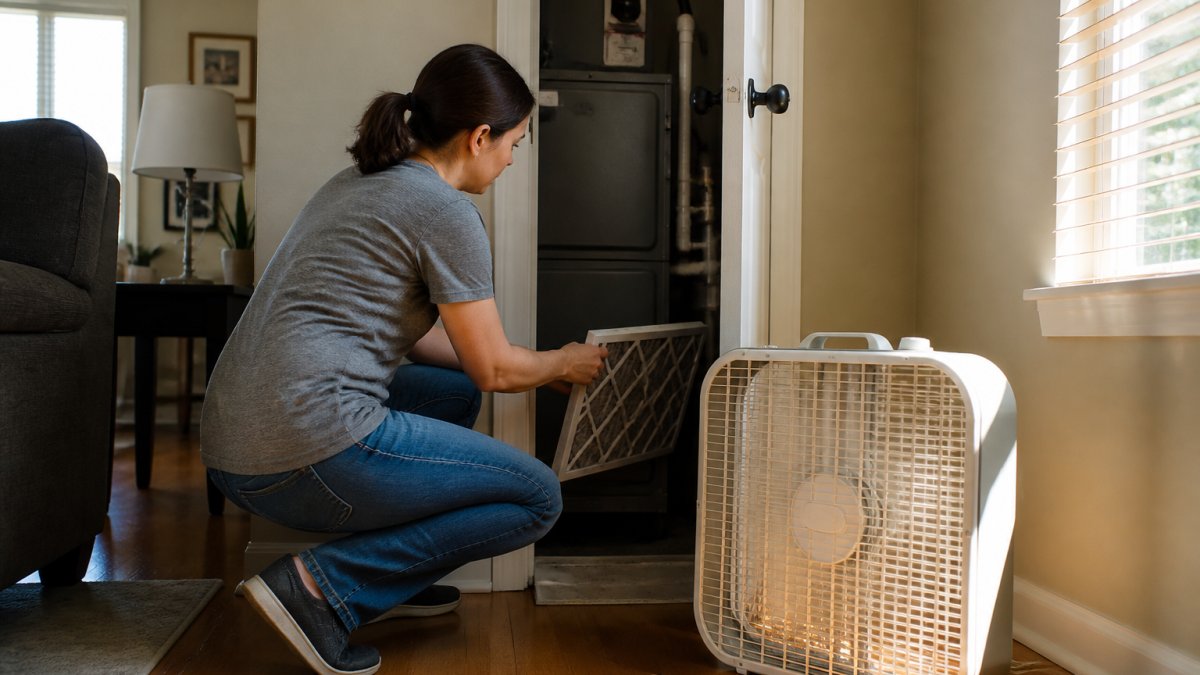
While you wait, protect your home and your family first. If your AC is running but not cooling, check the air filter, thermostat settings, and airflow around the outdoor unit before you assume the worst. A clogged filter or a unit buried in leaves can mimic a major failure. If your furnace isn’t producing heat, check the thermostat settings and whether air is moving through the vents.
Homeowner checking a furnace filter while waiting for hvac repair response time central in Illinois on a hot day
Close blinds and use fans during a cooling outage; open curtains for passive solar heat during a heating outage
Keep refrigerator and freezer doors shut if the outage is power-related
Clear a path to the indoor and outdoor units so the technician can work more easily
Write down when the problem started and what you noticed, so the diagnosis goes faster
Watch out: never open the furnace cabinet or poke at wiring to “take a look.” That’s how a small repair becomes a safety call.
Factors That Change Arrival Estimates and What to Tell the Dispatcher
Arrival estimates shift with call volume, weather severity, and whether your address sits on a rural route. Parts availability matters too: a compressor or a control board for an older model may need to be ordered, which can turn one visit into two.
Separate the clocks before you call
HVAC repair response time central in Illinois and repair completion time are not the same thing, and mixing them up is the most common source of frustration. Several clocks run during a breakdown:
Time to answer: how long until a person picks up or calls back
Dispatch time: how long until your address is logged and routed
Arrival time: how long until the truck reaches your driveway
Diagnosis time: how long the technician spends confirming the fault
Repair completion: how long until the system is running again, which may include a return visit for a part
When a company says “fast response,” ask which clock they mean. A same-day arrival with a two-day part wait is still a same-day response, and knowing that up front lets you plan.
What to tell the dispatcher
Give them the details that change the route and the priority:
Your full address and any gate codes or pets
System type and fuel source, plus the make and model if you can read the label
The exact symptom: no cool air, short cycling, strange smell, water leak, or no power
Whether anyone in the home is vulnerable to temperature extremes
Your availability window and a callback number that actually rings
Whether the system is completely down or just not keeping up
The clearer your description, the easier it is for the dispatcher to judge urgency.
How to manage a delay while you wait
If the arrival window slips, protect occupants and the home first. Move vulnerable family members and pets to the coolest or warmest room available, keep doors to unused rooms closed, and use fans or blankets as appropriate. Never run a gas stove or oven for heat, and never bring a generator or charcoal grill indoors (the CDC). If the delay is long and temperatures are extreme, a short stay with a neighbor or family member is a safer plan than waiting it out.
Watch out: if you smell gas or see scorched wiring, treat it as a safety call rather than waiting on a routine window.
Schedule Your HVAC Service With Chambers Services Inc.
The best way to shorten a future wait is to prevent the breakdown.
Chambers Services Inc. is a family-owned business established in 1995 with over 40 years of industry experience across heating, cooling, and major appliance repair. Every part and product we install carries our 5-year warranty, and financing options are available. We serve both residential and commercial customers.
If your system is more than 12 years old and has recurring refrigerant leaks or frequent breakdowns, replacing it may be more cost-effective than continuing to pay for repairs.
Get started with Chambers Services Inc. by scheduling your appointment.
Frequently Asked Questions
How quickly can an HVAC repair company respond to an emergency in Central Illinois?
Emergency HVAC repair response time in Central Illinois depends on the provider, the season, and call volume. During extreme heat or cold, same-day and emergency calls often fill up fast, so ask how quickly the company can respond when you call. Confirm the diagnostic fee policy and warranty coverage before scheduling so there are no surprises.
How long does HVAC repair take once the technician arrives?
How long HVAC repair takes depends on the problem. A clogged filter, thermostat issue, or loose connection may be fixed in under an hour. A failed capacitor, blower motor, or refrigerant leak can take several hours, especially if parts need to be sourced. Complex repairs or system replacements may require a return visit. Ask the dispatcher for a rough estimate when you book, and confirm whether the diagnostic fee applies toward the repair.
Can I get same-day HVAC repair service?
Same-day HVAC repair is often possible, especially for urgent no-cooling or no-heat calls, but availability varies with seasonal demand. During a heat wave or cold snap, high call volume can push non-emergency requests to the next day. To improve your chances, call early, describe the symptom clearly, and ask whether the company offers same-day service. Confirm the arrival window and any fees for expedited or after-hours visits before you commit.
What should I do while waiting for an HVAC technician?
While waiting for HVAC repair, check the air filter and thermostat settings, and make sure the outdoor unit has clear airflow. If your AC is running but not cooling, turn the system off to prevent further damage. If your furnace isn’t producing heat, confirm the thermostat is set to heat and that air is coming through the vents. Keep pets and children away from the equipment, clear a path for the technician, and have your model number and service history ready.