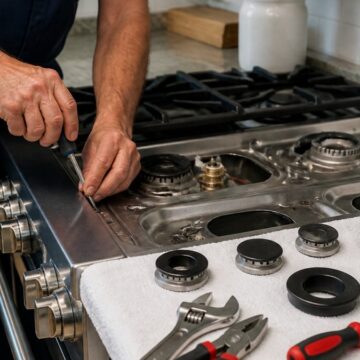
A gas stove repair is the diagnosis and correction of a fault in a gas-powered range or cooktop, covering components such as the igniter, thermocouple, burner assembly, and gas valve. Make the situation safe first, then ask the right questions, check the warranty, and compare response times rather than just prices.
If you smell gas, leave the house and call your gas utility from outside.
Perpendicular means closed and parallel means open on a quarter-turn ball valve.
Never use a flame to test for gas; a growing soap bubble indicates a leak.
Cleaning, resetting, and checking the breaker are homeowner tasks; gas valve work is professional.
We back every part and product we install with a 5-year warranty.
Most people search for gas stove repair near me while standing in a kitchen that smells faintly of gas, with dinner half-cooked and a family waiting. That pressure leads to rushed decisions. The same seven mistakes show up again and again.
A gas stove repair is the diagnosis and correction of a fault in a gas-powered range or cooktop, covering components such as the igniter, thermocouple, burner assembly, and gas valve. Gas appliances carry real safety risks, and the U.S. Consumer Product Safety Commission guidance on gas appliance safety makes clear that fuel-burning appliances deserve professional attention.
Here is what most guides get wrong: they treat this as a shopping problem. It is a safety problem first and a shopping problem second.
Mistake 1: Ignoring Gas Safety Before You Call
The biggest mistake is picking up the phone before you have made the situation safe. If you smell gas, leave the house and call your gas utility from outside. Do not flip light switches, unplug anything, or use a phone inside on the way out, a spark from an ordinary switch or a phone battery can ignite accumulated gas.
How to Shut Off the Gas: A Step-by-Step Procedure
Knowing where the valve is before you need it is the whole game. Walk through this once now, while the kitchen is calm:
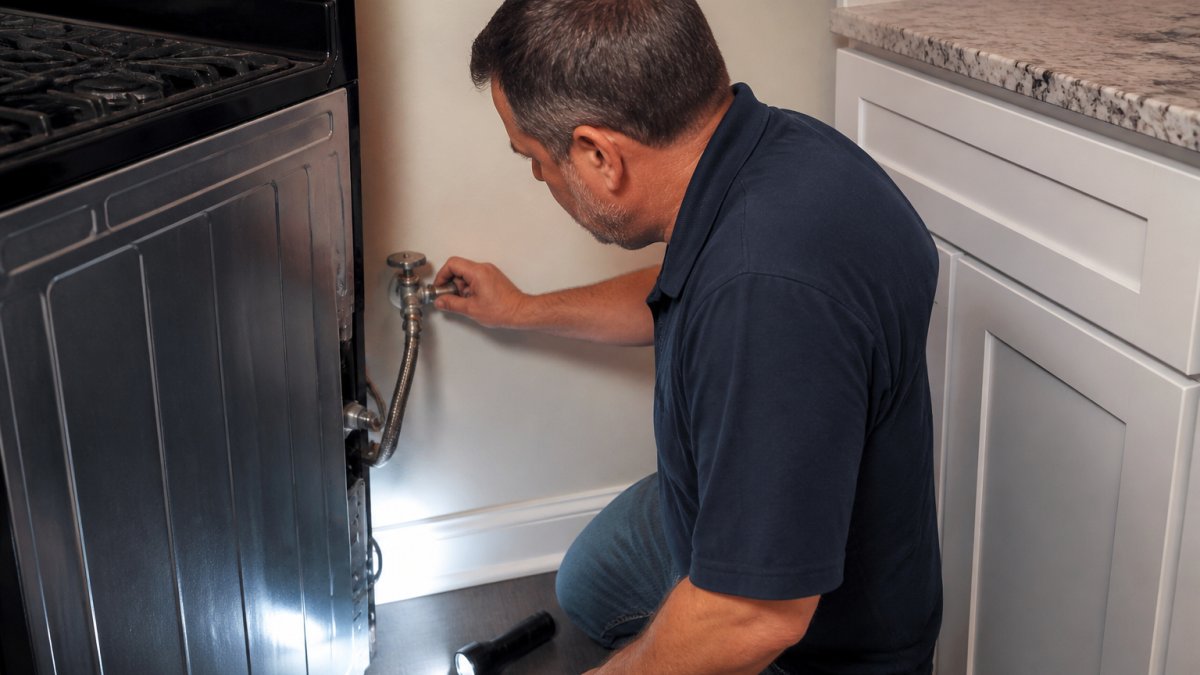
Locate the appliance shut-off valve. It sits on the gas supply line behind or beside the stove, usually a quarter-turn ball valve with a handle. Pull the stove out gently if needed, do not disconnect the flexible connector.
Turn the handle a quarter turn so it sits perpendicular (across) the pipe. Perpendicular means closed; parallel means open. Many handles are labeled, but trust the position, not the label.
Confirm the flame goes out and that you no longer smell gas at the appliance. If odor persists after the appliance valve is closed, the leak may be upstream, leave and call the utility.
Do not relight or test until a qualified technician has inspected the connection, the flexible connector, and the valve.
If you cannot find the appliance valve, do not hunt for it in a panic. Leave the home and call your gas utility; they can shut off service at the meter.
Gas Leak Detection: What to Check and What to Never Do
You do not need special equipment to catch the common warning signs:
Smell: Natural gas is odorized with a rotten-egg scent. Any persistent odor is a stop signal.
Sound: A hiss near the connection or valve suggests an active leak.
Soap test (only if you are calm and the area is ventilated): Apply a thin solution of dish soap and water to the connection with a brush. Bubbles that grow indicate a leak. Never use a flame to test for gas, this is the single most dangerous DIY mistake.
Watch Out Never attempt to find a gas leak with a match, lighter, or candle. Never use a vacuum, fan, or any motorized device near a suspected leak. Never relight a pilot or burner you suspect is leaking.
What Counts as an Emergency vs. an Annoyance
Treat these as emergencies, evacuate and call the utility from outside:
A persistent gas odor anywhere in the home
A hissing sound near the stove connection or valve
A yellow, lazy, or lifting flame instead of a crisp blue one (sign of incomplete combustion and possible carbon monoxide)
These are inconvenient but not urgent, schedule a normal service call:
An igniter that clicks without lighting (no gas smell)
One burner that lights slowly or unevenly
A burner cap that is loose or misaligned
Key Takeaway Make the situation safe first: shut the appliance valve, ventilate, evacuate if you smell gas, and call the utility from outside. Then call a qualified technician. A faulty igniter that simply clicks without lighting is annoying, not urgent, know the difference before you dial.
Homeowner turning the gas shut-off valve behind a stove during gas stove repair preparation
Know which symptoms mean evacuate and call the utility, and which can wait for a normal service call.
Situation
Emergency or annoyance
What to do
Persistent gas odor in the home
Emergency
Leave the house, call the gas utility from outside
Hissing sound near connection or valve
Emergency
Evacuate and call the utility from outside
Yellow, lazy, or lifting flame
Emergency
Treat as incomplete combustion; call a professional
Soot on pans or around burner ports
Emergency
Evacuate and call the utility from outside
Headache, dizziness, or nausea indoors
Emergency
Leave; symptoms easing outside is a red flag
Igniter clicks without lighting, no gas smell
Annoyance
Schedule a normal service call
One burner lights slowly or unevenly
Annoyance
Schedule a normal service call
Loose or misaligned burner cap
Annoyance
Schedule a normal service call
Mistake 2: Skipping the Gas Stove Repair Questions to Ask
A common mistake is hiring whoever answers first without asking anything. The right gas stove repair questions to ask separate a qualified appliance technician from a general handyman.
Ask these before you book:
Are you licensed and insured?
Do you repair my brand and model?
Is there a diagnostic fee, and does it apply toward the repair?
Chambers Services Inc. handles appliance repair requests for local homeowners.
Mistake 3: Overlooking Gas Stove Repair Warranty Terms
Warranty terms decide what you pay when the same part fails twice. A gas stove repair warranty should state clearly whether it covers parts, labor, or both, and for how long.
Watch out: many warranties cover the part but not the labor to install it, so a “free” replacement still costs you a service visit. Ask for the terms in writing before work begins.
We back every part and product we install with a 5-year warranty. For a deeper look at how coverage works, read what an HVAC installation warranty covers, since the same principles apply to appliance work.
Mistake 4: Assuming Every Company’s Gas Stove Repair Response Time Is the Same
Response time varies enormously, and it matters most when you need it least conveniently.
Ask three things: the current wait for a standard call, whether emergency repair is available, and whether after-hours visits carry extra fees.
Mistake 5: Trying a DIY Fix on a Faulty Igniter or Gas Valve
Replacing a burner cap or cleaning a clogged port is reasonable for a homeowner. A faulty igniter or gas valve sits inside the fuel path, and a small mistake there creates a real hazard. The line is simple: cleaning and resetting are homeowner tasks; anything involving the gas valve, gas line, or thermocouple belongs to a certified professional.
Troubleshooting Checklist: Is This Actually a Repair Call?
Work through this before you book. If you answer “yes” to any red-flag item, stop and call a professional.
Burner will not light
Is the burner cap seated flat and aligned? A tilted cap blocks the spark.
Are the burner ports clogged with grease or debris? A soft brush and warm soapy water can clear them after the burner cools.
Is the igniter clicking at all? No click may mean a tripped breaker or a failed igniter, check the breaker first.
Burner lights but flame is weak or uneven
Is the cap misaligned or the port partially blocked?
Is the flame yellow or lifting? Stop, this is a combustion issue, not a cleaning issue. Call a professional.
Igniter clicks but no flame
Confirm you smell no gas. If you do, evacuate and call the utility.
Check that the burner is fully seated and dry.
If clicking continues with no ignition and no gas smell, the igniter or spark module likely needs professional diagnosis.
Oven will not heat or heats unevenly
Check the thermostat setting and confirm the oven is not in a timed or Sabbath mode.
If the bake or broil element stays cold, that is a professional repair.
Pro Tip If a burner clicks but will not light, stop and call rather than keep trying. Repeated clicking can flood the burner area with unburned gas.
Maintenance Tips to Extend Your Range’s Lifespan
A gas range that gets regular care lasts longer and fails less often. Preventative maintenance is the cheapest repair you will ever buy.
Monthly
Wipe burner ports and caps with warm soapy water after they cool; grease buildup is the leading cause of weak ignition.
Check the flame color on every burner, it should be blue and steady.
Keep the area around the gas line and valve clear of stored items so you can reach the shut-off quickly.
Quarterly
Remove and soak burner grates and caps; scrub ports with a soft brush.
Vacuum around the valve and connector (with the appliance off) to remove dust and debris.
Check the flexible connector for kinks, cracks, or corrosion, do not tighten or adjust it yourself; note it for your technician.
Annually
Book a safety inspection that includes a leak check at the connection and a combustion check.
Replace worn burner assembly parts, caps, grates, and igniters, before they fail.
Have the technician confirm the appliance valve turns freely and fully closes.
Key Takeaway Cleaning, resetting, and checking the breaker are homeowner tasks. Anything involving the gas valve, gas line, thermocouple, or a yellow flame belongs to a certified professional. A simple monthly-and-annual routine prevents most igniter and valve failures before they start.
Mistake 6: Choosing on Price Alone
The cheapest service call often costs the most overall. A low diagnostic fee that leads to a wrong diagnosis means you pay twice.
Weigh the total picture: diagnostic fee, parts, labor, warranty, and whether the technician carries the right parts for a first-visit fix. Financing is available to help spread the cost of a larger repair across manageable payments, so budget alone does not have to decide. See who offers the best family-focused repair financing to compare your options.
Mistake 7: Skipping Preventative Maintenance
A gas range that gets regular care lasts longer and fails less often. Preventative maintenance is the cheapest repair you will ever buy.
A simple routine works:
Wipe burner ports monthly to clear grease and debris
Check the flame color; it should be blue and steady
Keep the area around the gas line clear
What to Do Before You Call for Gas Stove Repair
Make the situation safe first, then ask the right questions, check the warranty, and compare response times rather than just prices. That sequence prevents the seven mistakes above and gets your stove fixed once, correctly.
When you are ready, Chambers Services Inc. is here. We are family-owned, we have served local homeowners since 1995, we back installed parts with a 5-year warranty, and we offer financing.
Frequently Asked Questions
What should I do if I smell gas near my stove?
Leave the house first. Do not flip light switches, use your phone inside, or light anything. Turn the gas off at the shut-off valve if you can reach it safely, then call your gas utility’s emergency line from outside. Only after the leak is cleared should you book gas stove repair with a licensed and insured appliance technician. A smell of gas is never a wait-and-see problem, and a technician should inspect the gas line, gas valve, and burner assembly before the stove is used again.
How do I find a reliable technician for gas stove repair near me?
Verify that the company is licensed and insured before you book. Ask whether the diagnostic fee is applied toward the repair, and confirm the parts and labor warranty in writing. A qualified appliance technician should also ask you about the symptoms, the stove model, and whether you have smelled gas. Don’t pick on price alone: a low-cost service call that misses the root cause can cost more in the long run. Local, family-owned shops with a long track record are often the safest bet.
Does a gas stove repair come with a warranty?
It depends on the provider, so ask before the technician arrives. A gas stove repair warranty should spell out what is covered, whether labor is included or parts only, and how long the coverage lasts. Some companies back installed parts for years, while others offer a short window. Get the terms in writing and keep your invoice. If a repair fails inside the warranty period, that documentation is what gets it fixed at no extra charge.
Is it worth repairing a gas stove or should I replace it?
Repair usually wins when the stove is under about 12 years old and the problem is a single component, such as a faulty igniter, thermocouple, or burner assembly. Replacement makes more sense when the appliance is past that age and has recurring breakdowns or repeated gas valve issues. Ask the technician for a straight comparison of repair cost against replacement, and factor in how long you plan to stay in the home before you decide.
How long does a gas stove repair usually take?
Many common fixes, including igniter or thermocouple replacement, are finished on the first visit in an hour or two once the technician has the right part. Jobs that need a special-order component, a gas valve swap, or work on the gas line can take longer and may require a second appointment. Ask the company how long a visit is likely to take when you book.