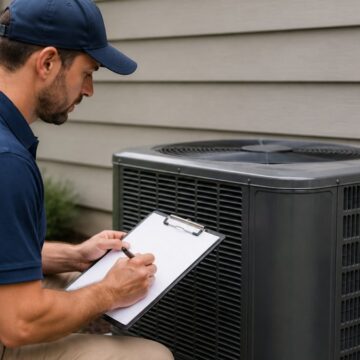
An HVAC installation warranty is the installing contractor’s written promise to stand behind its workmanship, covering labor on installation errors like loose connections, improper refrigerant charge, or undersized ductwork rather than the equipment itself. Manufacturer parts coverage is a separate contract, so confirm your installer’s labor warranty term in writing.
The manufacturer warranty follows the equipment, while the labor warranty follows the installer.
Voided coverage usually traces to neglected filter changes, third-party service, unauthorized modifications, or missing maintenance records.
A valid maintenance record needs the service date, equipment model and serial numbers, technician license number, tasks performed, and readings taken.
Register every component separately, including the outdoor unit, indoor unit, coil, and accessories, before the warranty deadline.
Chambers Services Inc. offers a five-year warranty on parts and products we install.
An HVAC installation warranty is a written promise that the company who installed your equipment will stand behind its workmanship, and it usually covers labor on installation errors rather than the equipment itself. Understanding what an HVAC installation warranty covers before you sign saves arguments later.
The coverage picture splits into three layers. The manufacturer’s limited warranty covers parts. The installing contractor’s labor warranty covers the work of putting those parts in correctly. Anything beyond that, like an extended service agreement or a home protection plan, is a separate product with its own terms.
Most homeowners assume these three are interchangeable. They are not, and the gap between them is where disputes begin.
Parts, Labor, and What Sits in Between
Parts coverage is the manufacturer’s promise that a defective component will be replaced if it fails within the warranty term. This is a limited warranty: it typically covers the part itself, and coverage for labor or diagnostic fees varies by plan.
Labor coverage is the installer’s promise. If the system fails because of an installation error, a loose connection, an improperly charged refrigerant line, or undersized ductwork, the installing company absorbs the cost of fixing it.
Here is the part most guides miss: a manufacturer defect and an installation error look identical to a homeowner. Both produce a system failure. Only a technician can tell you which one you have, and that determination decides who pays. Get it in writing at the time of diagnosis, not after.
HVAC Manufacturer Warranty vs Labor Warranty
The manufacturer warranty and the labor warranty are two different contracts with two different parties, and confusing them is the single most common source of warranty frustration. The manufacturer warranty follows the equipment. The labor warranty follows the installer.
A manufacturer warranty covers parts for registered equipment and covers manufacturing defects, not installation mistakes. A labor warranty from an installer covers workmanship; its term should be confirmed in writing. Neither one covers the other’s territory.
When a claim is filed, the sequence matters. The technician diagnoses the failure and assigns a cause. If the cause is a defective part, the manufacturer supplies a replacement and the installer charges labor. If the cause is installation error, the installer covers both. If the cause is neglect, nobody covers it.
That is why we tell every customer to keep the diagnostic report. It is the document that determines which warranty applies.
Warranty Coverage Comparison: Manufacturer, Labor, Extended, and Home Warranty Plans
Four coverage types exist, and they overlap less than the marketing suggests. The table below lays out what each one actually pays for.
Coverage Type
What It Covers
Who Provides It
Typical Term
Exclusions to Watch
Manufacturer limited warranty
Parts only, defective components
Equipment maker
5-10 years, often conditional on registration
Labor, refrigerant, diagnostic fees
Installer labor warranty
Workmanship and installation errors
Installing contractor
1-5 years
Neglect, third-party service, filter neglect
Extended service agreement
Parts and labor past the standard term
Manufacturer or third party
Varies by contract
Maintenance requirements, deductibles
Home warranty or protection plan
Broad systems coverage with a service fee per visit
Home warranty company
Annual renewal
Pre-existing conditions, maintenance history
The extended service agreement and the home protection plan are the two most misunderstood. An extended service agreement usually picks up where the manufacturer warranty ends. A home warranty is a renewable service contract with a deductible or service fee per visit, and it often excludes systems with no maintenance record.
Read the exclusions page before the coverage page. That is where the real terms live.
Common Reasons HVAC Warranties Are Voided
Voided coverage almost always traces back to something the homeowner did or failed to do, and it is rarely a surprise to a technician. The most frequent causes are preventable.
Neglected filter changes. Restricted airflow from a clogged filter strains the blower and compressor. Manufacturers treat this as neglect, not defect. Our guide on how often you should replace your HVAC filter covers the schedule.
Third-party or unqualified service. Letting an unlicensed technician touch the system during the warranty term gives the manufacturer grounds to deny a later claim.
Unauthorized modifications. Added components, relocated units, or altered ductwork outside the original design void coverage.
No maintenance records. When a claim is disputed, the service history is your evidence. No records, no proof.
HVAC Maintenance Requirements for Warranty Coverage
Many manufacturer warranties and extended service agreements require documented preventative maintenance. Annual furnace maintenance keeps that documentation in place for your heating equipment. Check your specific warranty terms for maintenance requirements. The word that decides these disputes is documented, and most homeowners do not know what documentation actually satisfies a claims adjuster.
What Counts as Proof of Maintenance
A claims adjuster is looking for a record that ties a licensed technician to a specific date and a specific set of tasks on your equipment. AC maintenance service in Central IL keeps that record current and protects your coverage. That means a service invoice that includes:
The service date and the equipment model and serial number
The technician’s name and license or certification number
The tasks performed, filter replacement, coil cleaning, refrigerant charge check, electrical and combustion checks as applicable
The readings taken, such as refrigerant pressures, temperature split, or combustion analysis results
The company’s name and a signature or digital authorization
A homeowner’s note that says “changed filter” is not the same thing, and a generic receipt with no equipment details is easy for an adjuster to set aside. The professional invoice carries the weight because it is third-party evidence.
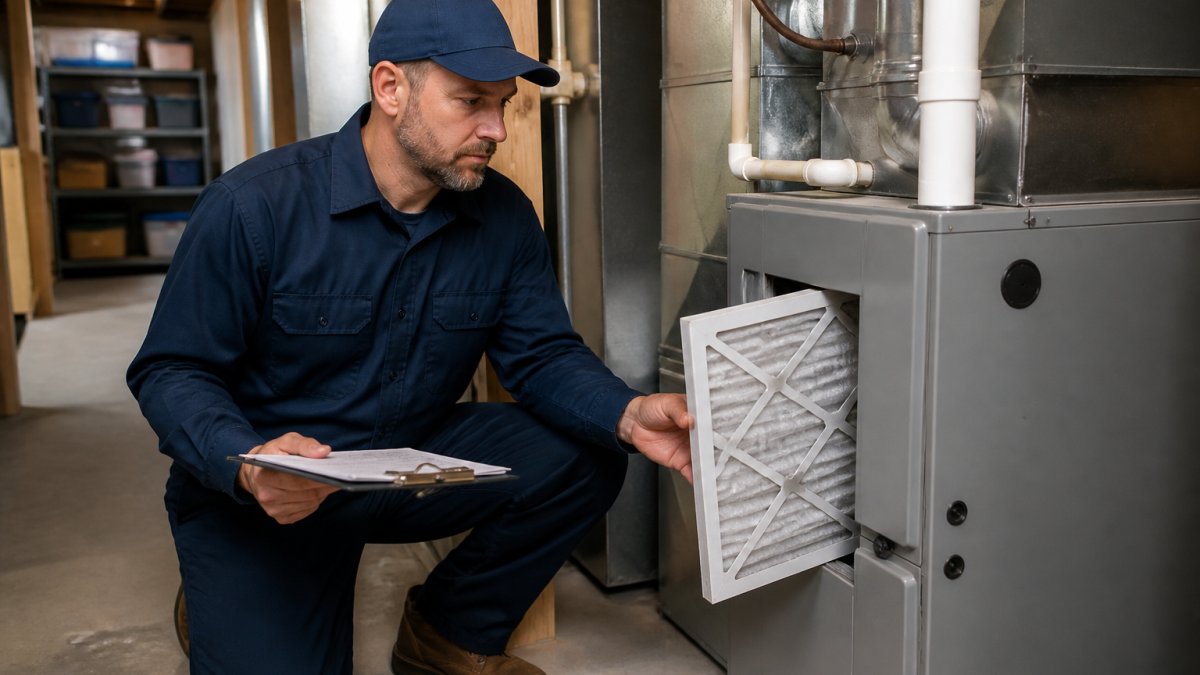
HVAC technician checking a furnace filter to maintain the HVAC installation warranty coverage
DIY Maintenance vs. Professional Records
DIY maintenance has a real place, and it is worth being precise about where the line sits. Homeowner tasks, changing filters on schedule, keeping the outdoor condenser clear of leaves and debris, and confirming the thermostat is set correctly, support a maintenance claim but do not replace the annual professional tune-up most warranties require. Keep a simple log of filter changes with dates; it shows a pattern of care if a dispute arises.
What you should not do yourself: refrigerant handling, electrical diagnostics, and combustion analysis. These require licensing and equipment, and attempting them creates exactly the record gap that voids coverage, worse, an unpermitted DIY repair gives the manufacturer grounds to deny a later claim outright.
Pro Tip Schedule the annual tune-up in the same month every year and keep every invoice in one folder, digital or paper. A predictable service history is the strongest evidence you can present, and it takes almost no effort once the habit is set.
The Maintenance Clause in Extended Service Agreements
Extended service agreements are stricter than manufacturer warranties on this point. Many require proof of annual professional maintenance as a condition of coverage, and some require it to be performed by the contract provider or an approved technician. Read that clause before you buy the plan, a service agreement that requires maintenance you do not schedule is coverage you will never collect on.
How to Register HVAC Equipment for Warranty Protection
Registration is often required to keep the full manufacturer parts term, and it is commonly the homeowner’s responsibility. The installing contractor supplies the model and serial numbers, but the registration itself frequently falls to you, and the deadline is unforgiving.
Manufacturers often set a registration window after installation. Check the warranty document for the deadline that applies to your equipment.
Watch Out The registration clock usually starts on the installation date on the invoice, not the day you moved in or the day you first noticed the equipment. If you bought a home with a recently installed system, assume the window may already be closed and check the manufacturer’s portal before you need a claim.
Register Every Component, Not Just the Condenser
A split system often includes several components, such as an outdoor condenser and an indoor air handler or furnace, each with its own model and serial number. Check whether each component’s registration requirements apply.
Follow this sequence:
Photograph the data plate on the outdoor condenser and on the indoor air handler or furnace. The plate lists model and serial numbers.
Pull the dated installer invoice, this is your proof of purchase and your installation date.
Create an account on the manufacturer’s warranty registration page for your specific brand.
Enter each component separately: outdoor unit, indoor unit, coil, and any registered accessories.
Submit before the deadline stated in the warranty document, do not wait for a reminder.
Save the confirmation email and registration number for each component in the same folder as the invoice.
What to Do If You Missed the Deadline
Call the manufacturer’s warranty line directly and ask whether a late registration can be reinstated with proof of professional installation. Some brands allow a one-time exception; many do not. If the answer is no, your fallback is the installing contractor’s labor warranty and any extended service agreement, which are separate contracts and are not affected by the manufacturer’s registration deadline. This is one more reason the installer’s own workmanship guarantee matters as much as the manufacturer’s paperwork.
If you cannot find a serial number, the installing contractor’s office usually has it on file from the original invoice, call before you assume the record is lost.
Labor vs. Parts: Breaking Down What You Actually Pay When a Claim Is Filed
When a claim is approved, the parts and labor split determines your out-of-pocket cost, and the split is rarely explained up front. Here is how it typically breaks down.
The manufacturer ships the replacement part under the parts warranty. You pay nothing for the part itself. You do pay the labor to diagnose the failure and the labor to install the replacement, unless your installer’s labor warranty is still active and the failure is attributable to workmanship.
Add the items nobody quotes in advance: the diagnostic fee, refrigerant if the repair requires a recharge, and any related components not covered by the parts warranty, such as line sets or drain components.
Chambers Services Inc. offers a five-year warranty on parts and products we install. Ask any contractor two questions before signing: how long is your labor warranty, and does it cover diagnostic fees? The answers separate a real workmanship guarantee from a marketing line.
Transferability, DIY Records, and Other Warranty Details Homeowners Miss
Three details decide more warranty disputes than any others, and none of them appear on the sales sheet.
Transferability. Some manufacturer warranties transfer to a new owner if the equipment was registered, often with a shortened remaining term. Others do not transfer at all. If you are buying or selling a home with recent HVAC equipment, confirm the transfer terms in writing before closing.
DIY records versus professional records. A homeowner log of filter changes supports a maintenance claim but does not replace the annual professional tune-up most warranties require. Keep both. The professional invoice carries the weight.
The parts-versus-labor math over time. A ten-year parts warranty sounds generous until you price the labor for a compressor replacement in year eight. Weigh the labor warranty term as heavily as the parts term when comparing installation quotes.
One more: keep the original invoice. Proof of purchase is the document every claim starts with, and a surprising number of homeowners cannot produce it when a system fails. Store it with the registration confirmation.
Schedule Your Installation and Lock In Your Warranty
Chambers Services Inc. has been family-owned since 1995, with more than 40 years of industry experience. Every part and product we install carries our five-year warranty, and financing is available for homeowners who need to spread the cost of a new system.
What is the difference between a manufacturer warranty and an installation warranty?
A manufacturer warranty covers defects in the equipment itself, such as a failed compressor or a leaking evaporator coil, and is typically limited to parts. An installation warranty comes from the contractor and covers problems caused by how the system was installed, including labor. Some contractors also include a labor warranty on top of the manufacturer’s parts coverage, which is why reading both documents matters before you sign.
Does an HVAC installation warranty cover labor costs?
Often it does not. Many manufacturer warranties cover parts replacement only, leaving you to pay the HVAC technician for diagnosis and installation of the new part. Contractor-backed warranties and extended service agreements are the usual routes to labor coverage. Ask upfront whether the diagnostic fee is applied toward the repair and confirm in writing whether labor is included, since this is where most out-of-pocket costs appear.
What voids an HVAC installation warranty?
The most common reasons HVAC warranties are voided include installation by an unlicensed technician, failure to register the equipment, skipped annual tune-ups, and repairs attempted by someone without authorization. Installing a mismatched component, such as a condenser unit paired with an incompatible evaporator coil, can also void coverage. Keep proof of purchase, serial numbers, and maintenance records together so you can show the work was done correctly.
Do I need to register my HVAC system to keep the warranty valid?
Yes, in most cases. Manufacturer warranties frequently require serial number registration within a set window after installation, and missing that deadline can shorten or cancel coverage. Registration pitfalls include entering the wrong model number, registering under a company name instead of the homeowner, and assuming the contractor did it for you. Confirm registration yourself and keep the confirmation email or card with your proof of purchase.
How long do HVAC installation warranties typically last?
Manufacturer parts warranties on major components often run several years, with some compressor and heat exchanger coverage lasting longer. Labor warranties from contractors are usually shorter. Extended service agreements add time but come with their own terms, deductibles, and maintenance conditions. Check the limited warranty document for the exact term on each component rather than assuming one date covers the whole system.
Does a home warranty cover HVAC system replacement?
A home warranty or home protection plan is a service contract, not a manufacturer warranty, and replacement coverage depends on the plan’s terms. Many plans cap payouts, require a deductible, and exclude systems that failed because of neglected maintenance. Manufacturer warranties cover defects, not end-of-life replacement. If your system is more than 12 years old with recurring refrigerant leaks or frequent breakdowns, compare repair costs against replacement before relying on any plan.