To avoid repeat AC repairs, fix the root cause instead of just replacing the failed part, run monthly homeowner checks on filters, drains, and the outdoor unit, and book spring and fall technician tune-ups. Keep a written log of every failure, part, and date so patterns get diagnosed rather than patched.
Check your air filter monthly and replace it when you cannot see light through it.
Keep at least two feet of clearance around the outdoor condenser unit.
Stop DIY checks and call a technician if the breaker trips twice or ice returns after thawing.
Log the date, symptom, fault code, part replaced, and days until failure for each repair.
Replace rather than repair if the system is over 12 years old with recurring refrigerant leaks.
Why Repeat AC Repairs Happen and How to Stop the Cycle
Learning how to avoid repeat AC repairs starts with one uncomfortable fact: most repeat failures are not bad luck.
A technician replaces a failed part. The system runs. Three weeks later, it quits again.
The fix is rarely more repairs. It is prevention, better diagnosis, and a written record of what keeps failing.
Below, we will show you exactly what to check, what to log, and when to stop repairing and start replacing.
Your Annual AC Maintenance Checklist for Fewer Breakdowns
An annual AC maintenance checklist is a season-by-season plan for filters, coils, drains, and professional inspections that keeps a system running without surprise failures. The goal is simple: catch small problems before they become emergency repairs.
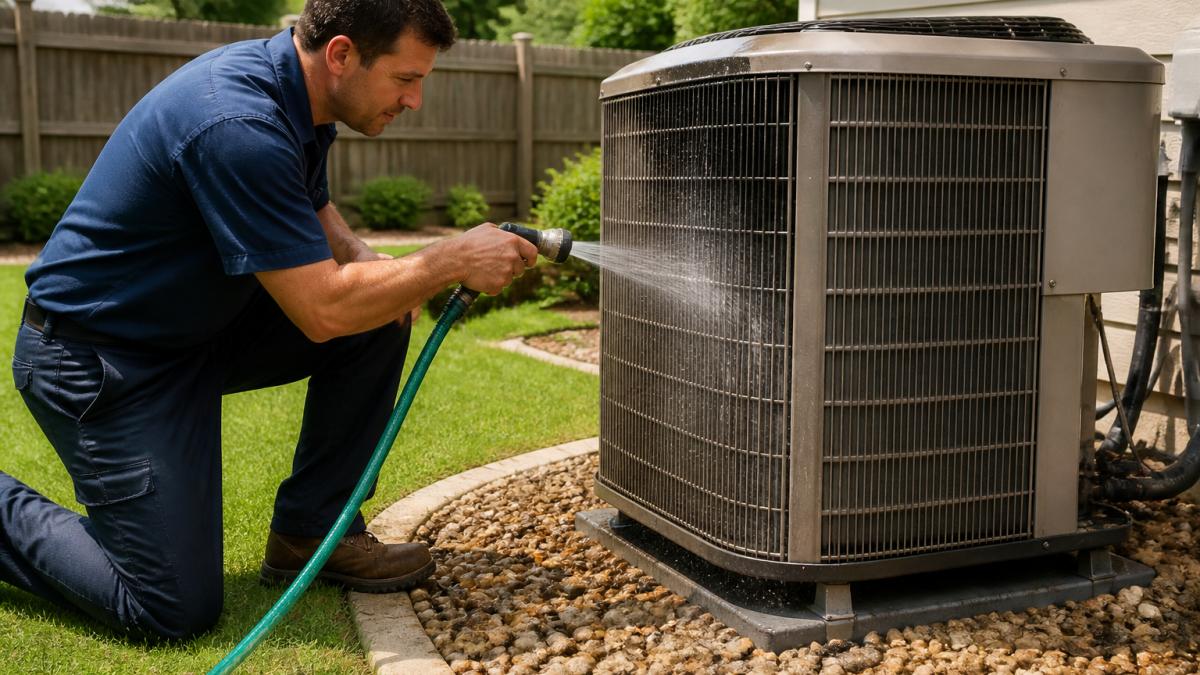
Homeowner rinsing an outdoor AC condenser with a hose to prevent repeat AC repairs
Here is the schedule we recommend to homeowners:
Interval
Task
Who Does It
Monthly
Check filter condition, replace if dirty
Homeowner
Every 1-3 months
Filter replacement in heavy-use homes
Homeowner
Monthly in season
Clear debris from outdoor unit
Homeowner
Monthly in season
Check condensate drain line
Homeowner
Spring
Full seasonal tune-up and system inspection
Licensed technician
Fall
Heating check and blower inspection
Licensed technician
That split matters. Some tasks are safe for anyone. Others belong to a pro.
What a Homeowner Can Safely Check
Air filter: pull it, hold it to the light, replace if you cannot see through it.
Thermostat: confirm settings and fresh batteries.
Outdoor unit: clear leaves, grass clippings, and dirt from the condenser fins.
These five checks prevent a large share of clogged filter and airflow problems.
What Belongs to a Licensed Technician
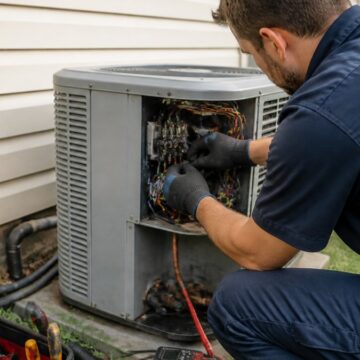
Refrigerant handling, electrical components, motor lubrication, and blower assembly work are not DIY jobs. A technician checks refrigerant charge, tests capacitors, inspects the blower motor, and cleans the coils properly.
This is also where duct cleaning and duct sealing get evaluated. Leaky ducts waste cooling and make the system work harder. To make sure your cooling is running as it should, ask a licensed HVAC provider for a system inspection.
Air Conditioner Troubleshooting Steps Before You Call Anyone
Air conditioner troubleshooting steps are the safe checks a homeowner runs before booking service: filter, thermostat, breaker, outdoor unit, airflow, and drainage. Most no-cool calls trace back to one of these, and running them in order tells you whether you have a simple fix or a symptom that needs a licensed technician.
Run them in this order and note what you find:
Air filter. Pull it, hold it to the light, and replace it if you cannot see through it. A clogged filter restricts airflow, which can freeze the indoor coil and mimic a refrigerant problem.
Thermostat. Confirm it is set to cool, the fan is on auto, and the batteries are fresh. A thermostat in fan-on mode runs the blower without cooling and can look like a broken system.
Breaker. Reset the breaker at the panel once. If it trips again immediately, stop and call a technician, a repeated trip points to an electrical fault, not a nuisance trip.
Outdoor condenser. Clear leaves, grass clippings, and dirt from the fins and confirm the fan spins freely. Keep at least two feet of clearance around the unit.
Airflow. Check that supply vents are open and furniture or rugs are not blocking returns. Closed vents in unused rooms raise static pressure and reduce cooling elsewhere.
Drain line. Look for standing water near the indoor unit or a float switch that has shut the system down. A clogged condensate drain is a common cause of a system that quits on humid days.
Ice check. Look for ice on the indoor coil or the refrigerant lines. If ice is present, shut the system off at the thermostat and let it thaw before running it again, running a frozen system causes damage.
Watch Out Do not open electrical panels beyond resetting a breaker, do not add refrigerant, and do not attempt to clean the indoor coil or blower assembly yourself. Refrigerant handling and electrical components belong to a licensed technician.
Reading Fault Codes Before You Call
Many modern systems store a fault code on the control board or thermostat. Before you book service, write down the code and the conditions when it appeared, for example, “E4 flashing after 20 minutes on a 95-degree afternoon.” A technician who knows the code and the conditions arrives with the right parts and a head start on diagnosis. If your system has no display, check the control board inside the outdoor unit for a blinking LED and count the flashes.
When to Stop and Call a Technician
Stop troubleshooting and book service if the breaker trips twice, ice returns after thawing, the outdoor fan does not spin, you smell burning or see scorch marks, or the system cools then quits repeatedly. These point to electrical faults, refrigerant leaks, or a failing compressor, problems that get worse with repeated restarts. You can book fast, friendly AC repair with certified technicians who fix all air conditioner issues.
A Simple Symptom Log to Bring to the Service Call
Keep a one-page log with the date, the symptom you noticed first, the outdoor temperature, any fault code, and what you did before calling. Hand it to the technician at the door. A written history shortens diagnosis and helps the technician tell a one-time fault from a pattern, which is the difference between a repair that holds and a repeat visit.
Signs an AC repair did not fix the problem include the same failure returning within weeks, new noises, weak airflow, a system that cools then quits, or a repair that came with no explanation of the cause. Repeat repair is usually a diagnosis problem, not a parts problem.
Watch for these red flags:
The identical breakdown returns within a few weeks
Cooling is weaker than before the repair
New sounds appear: rattling, grinding, or hissing
How to Evaluate the Diagnosis and the Repair
A useful diagnosis names the root cause, not just the failed part. When a technician finishes, ask three questions: What caused this part to fail? What test confirmed it? What should I watch for to know the repair held?
Ask for a written estimate before work begins that lists the part, the labor, and the diagnostic finding. After the repair, ask the technician to run the system through a full cooling cycle and show you the supply-air temperature split between the return and the nearest register.
Pro Tip Before the technician leaves, confirm the warranty on the part and labor in writing, and ask whether the diagnostic fee applies toward the repair. A repair with no paper trail is hard to defend if the same failure returns.
How to Keep a Troubleshooting Log for Repeat Failures
A troubleshooting log is a simple written record of every failure, repair, part, and date. It turns guesswork into a pattern you and your technician can act on.
Track six fields:
Date of the failure
Symptom you noticed first, plus any fault code
Outdoor temperature and run time before the failure
Three repairs in one season, or the same part twice, is your signal to escalate. Bring the log to the next service call and ask the technician to diagnose the pattern rather than replace the part again. If the same component keeps failing, the underlying cause is often restricted airflow, a drainage problem, an electrical fault, incorrect sizing, or an installation issue, and those are fixed at the source, not at the part. If your last repair felt rushed, review the checklist in the section above before you call someone new. How to find reliable HVAC service near you can help you vet the next company before you book.
When to Replace an Air Conditioner Instead of Repairing It Again
Replacing an air conditioner makes more sense than another repair when the system is more than 12 years old and has recurring refrigerant leaks or frequent breakdowns. At that point, repair costs stack up against a system that keeps failing.
Use this framework:
Repair if the unit is young, the failure is isolated, and the part is under warranty.
Replace if the system is over 12 years old, leaks refrigerant repeatedly, or breaks down more than once a season.
Get a second opinion if a technician recommends replacement without explaining why.
Schedule Your Maintenance Visit Before the Next Heat Wave
Preventive maintenance is typically far less costly than an emergency repair. A seasonal tune-up can catch clogged filters, dirty coils, and worn moving parts before they cause a breakdown during a heat wave.
One more thing: when you hire, verify the technician is licensed and insured. Ask whether the diagnostic fee applies toward the repair, and confirm warranty coverage before scheduling.
Frequently Asked Questions
Why does my AC keep breaking down after it has been repaired?
A repair that only addresses the symptom, such as a frozen coil or a tripped breaker, will fail again if the root cause stays in place. Common culprits are a clogged filter, restricted airflow, low refrigerant from a small leak, or a failing blower motor. Ask your technician to explain what caused the failure and what was done to correct it, not just what part was swapped. If the same symptom returns within weeks, that is a signal the diagnosis was incomplete and a second opinion is reasonable.
How can I tell whether an AC repair fixed the root cause?
Track performance for a full cooling cycle after the visit. The system should reach your thermostat setting without running nonstop, indoor humidity should stay comfortable, and the outdoor unit should cycle on and off normally. Write down the date, the symptom, the part replaced, and how the system behaves over the next two weeks. If the same symptom reappears, that log gives the next technician a clear history and helps you push for a deeper diagnosis instead of another quick patch.
What should I check before calling an HVAC technician?
Start with the air filter, thermostat settings, and airflow around the outdoor unit. A clogged filter is one of the most common causes of weak cooling and frozen coils, so check it monthly during heavy use and replace it when it looks dirty. Confirm the thermostat is set to cool and the batteries are good, and clear leaves or grass clippings away from the condenser. If those checks do not solve it, note the symptoms and schedule service rather than opening panels yourself.
Is it necessary to service your AC every year?
An annual tune-up catches small problems before they become repeat AC repairs. A technician can clean the condenser, check refrigerant levels, inspect the blower assembly and moving parts, and test electrical connections. Skipping it does not guarantee a breakdown, but it removes the chance to catch wear early. For systems over 12 years old with recurring leaks or frequent breakdowns, ask during the visit whether continued repairs still make financial sense compared with replacement.
Repeat AC repairs are a cycle, and breaking it takes a real plan: consistent maintenance, honest diagnosis, and a record of what keeps failing. Chambers Services Inc. has served Central Illinois families since 1995, backed by over 40 years of industry experience and a 5-year warranty on all parts and products we install, plus financing options to spread the cost. Get started with Chambers Services Inc. and schedule your maintenance visit before the next heat wave.